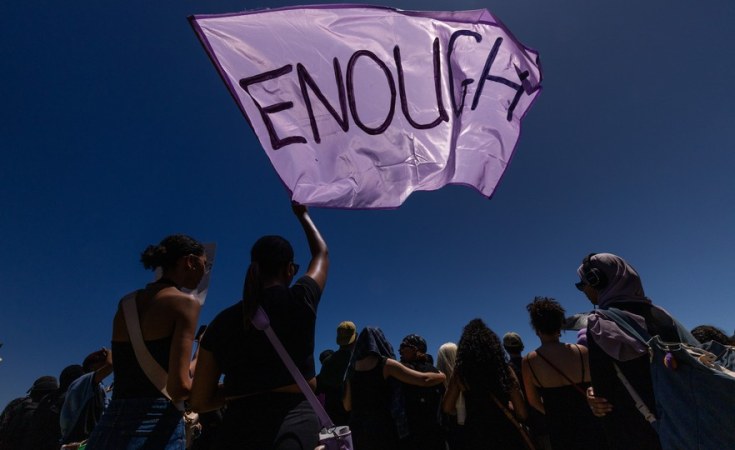
“Usikimye.” Do not be silent. The Swahili word has become a rallying cry among survivors in Kenya, who are tired of bearing shame that is not theirs.
The 16 Days of Activism Against Gender-Based Violence ends on December 10, with the ongoing crisis affecting millions of women and girls in sub-Saharan Africa still in focus. It is estimated that one in three women, or 840 million worldwide, has faced physical or sexual violence in their lifetime. According to the World Health Organization and United Nations partner agencies, 316 million women have experienced intimate partner violence in just the past year. The crisis also disproportionately affects marginalized groups. The latest global data on violence against women and girls shows a serious human rights crisis. Violent acts can violate their human rights and result in devastating psychological, physical, and social consequences, including death.
Studies revealed that violence not only negatively impacts women’s health and well-being but also negatively impacts their children’s safety, health, and education. Children growing up in homes where women face violence are more likely to experience physical or psychological abuse. The risk of carrying violence into adulthood increases with this kind of exposure. However, despite current policies, systemic failures stemming from cultural norms and inconsistent leadership continue to undermine prevention efforts, the justice process, and the assistance provided to survivors.
“Within sub-Saharan Africa, GBV is prevalent due to various systemic, socio-cultural and structural factors that are often largely unaddressed,” said Dr. Susan Ontiri, Country Director at the International Centre for Reproductive Health-Kenya (ICRHK). She said that most GBV interventions and prevention strategies only tackle immediate or surface-level causes, rather than the root issues that sustain the cycle of violence.
“Gender inequalities are rooted in punitive socio-cultural norms that promote male dominance and female suppression,” she said. “Systemic failure persists due to deep-rooted weak enforcement of laws and often strained judicial systems that remain under-resourced and difficult to access, while implementation gaps in well-documented policies stem from limited resources and low political will.”
In the Kenyan context, she said that economic inequality and weak enforcement of the law have made girls and women more vulnerable to violence. She said that in some communities, women are largely dependent on men, and when they make their own income, they have little to no say as to how this income should be used. Dr. Ontiri said that girls, in many cases, are forced into non-consensual sexual and exploitative situations to make ends meet and have the ability to purchase basic needs such as sanitary pads, situations that sometimes turn violent.
“This, coupled with the significant loopholes in law enforcement, presents fewer systemic supports through which vulnerable girls and women can be protected,” she said.
Gender-based violence is often seen as a “private matter,” which continues to cause human rights violations across Kenya and beyond.
The framing of GBV as a private family issue plays a major role in its continuation and the absence of accountability in many African settings. This perspective is based on widespread patriarchal norms and traditional power imbalances. It can silence survivors, discourage reporting, and reinforce stigma, which makes it hard for victims to find help or seek justice. As a result, offenders may not face consequences, which keeps the cycle of abuse going.
However, Dr. Ontiri cites promising models already making an impact across Kenyan communities.
In Kenya, she said, some of the strategies include implementation of Social & Behavior Change interventions, community-led dialogue models, community gatekeepers’ engagement and male engagement dialogue sessions. These interventions can be taken to scale through the integration of evidence-based models into the County Integrated Development Plans (CIDPs), national plans, and within communities and schools.
“Further, leveraging existing collaborations and partnerships with community structures will help to strengthen long-term change and sustainability,” she said. “Ultimately, the goal is to create awareness and debunk various myths that previously made it ‘okay’ for women and girls to be violated without consequences.”
She said the Usikimye, loosely translated to ‘Do Not Be Silent’, campaign as an example of efforts encouraging survivors to speak openly. Usikimye is dedicated to ending gender-based violence (GBV) and femicide through survivor-centered, feminist, and trauma-informed approaches. The organization believes in empowering survivors to reclaim their lives and voices.
Dr. Ontiri said such initiatives, and several other efforts aimed at addressing the stigma and silence around GBV and Intimate Partner Violence (IPV), conversations on GBV continue to receive attention in mainstream media, attention that has contributed to bolder demands for social accountability and action against GBV. “By highlighting GBV as not only a social issue but also a health problem, advocating for action to be taken and empowering women and girls with a voice, we hope that these steps can bring about the much-needed change in society,” she said.