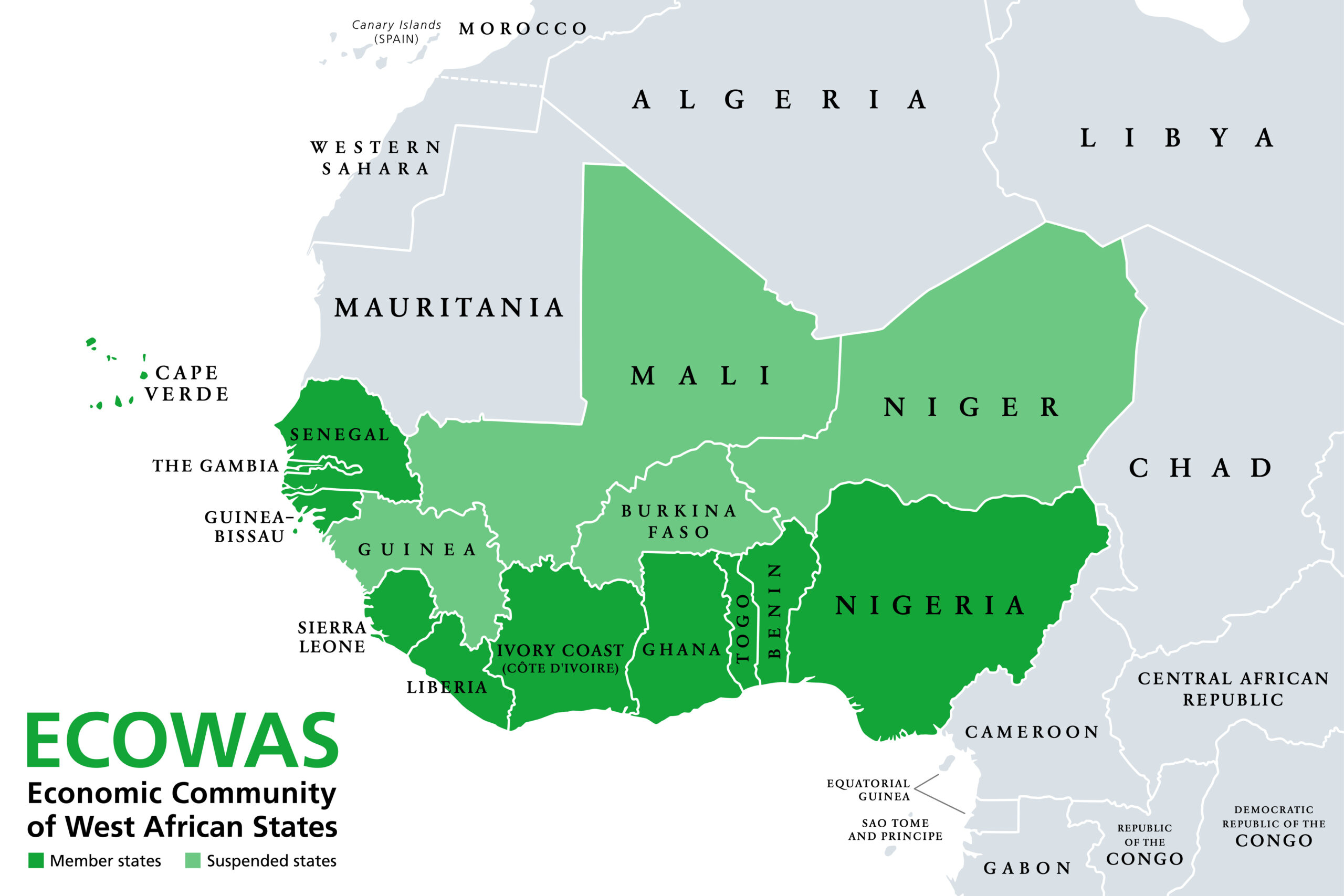
The Economic Community of West African States has restarted efforts to finalise its long-pending Regional Blue Economy Strategy, beginning with a high-level consultative workshop held on Monday in Abuja.
The workshop gathered key representatives from ECOWAS member states, regional economic bodies, and continental institutions to review and validate the draft strategy, which has been inactive since its initial development in 2022.
The blue economy—covering marine resources, aquaculture, maritime transport, ocean conservation, and climate adaptation—is regarded as essential for sustainable growth across West Africa.
The initial draft was created under the Programme for Improved Regional Fisheries Governance in Western Africa, but had since stalled due to administrative delays.
The Programme Officer for Fishery Development and Focal Person for Blue Economy at ECOWAS, Djiga Thiao, delivered remarks on behalf of the outgoing Director of Agriculture and Rural Development, Alain Traoré.
Thiao warmly welcomed participants to Abuja and underscored the strategic importance of regional cooperation on marine resource management.
He highlighted the interconnected nature of marine sectors and the need for policy alignment.
“You know that the marine resources and the water resources are the crossroads of many sectors—fisheries, aquaculture, shipping—also in the context of climate change and sustainable livelihood that we need to get from these resources. So we need to have harmonised policies and guiding policies to get the best benefit from these resources.
“That’s why we need a blue economy strategy. It is highly important for ECOWAS to have a regional one.
He acknowledged the historical gap in progress.
“I should remind you that we had a draft since 2022 that was pending. I think that was during the PESCAO project. And unfortunately, after the PESCAO project, this draft was staying just like it is so far.”
Despite the delay, Thiao emphasised that the strategy remains a top priority within the ECOWAS Commission.
“The Commissioner said she wanted this blue economy strategy to be one of ECOWAS’ biggest legacies. Unfortunately, she is leaving us tomorrow and as well as the director.
“But like the French people say, les personnes partent, les institutions demeurent. So this blue economy will still be a big priority for the new director and Commissioner who are coming. And that’s why we are fully committed to making this process of review and validation very successful.”