A $9 million U.S. lobbying deal meant to manage Nigeria’s image has instead deepened scrutiny of the Tinubu administration, as critics argue it reflects diplomatic paralysis, economic misjudgment and desperation amid worsening insecurity and foreign pressure.
They noted that the country is paying to explain itself abroad because it failed to govern, communicate, and represent itself effectively at home and through its diplomatic institutions.
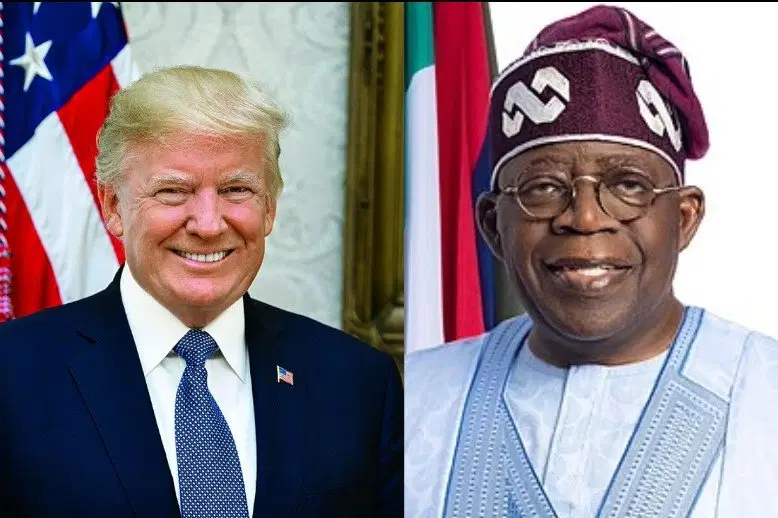
Nigeria’s failure to appoint ambassadors for more than a year left the country increasingly dependent on expensive foreign lobbyists to defend its interests abroad, culminating in the contract worth an estimated N13 billion with a United States firm closely linked to President Donald Trump.
Documents filed under the U.S. Foreign Agents Registration Act (FARA) and seen by The Guardian show that the Nigerian government retained DCI Group, a Washington-based lobbying and public relations firm, to counter growing pressure from the U.S. over allegations of targeted killings of Christians in Nigeria.
Foreign policy analysts, however, say the engagement highlights the cost of a prolonged diplomatic vacuum left by President Bola Tinubu’s September 2023 recall of all Nigerian ambassadors, which has yet to be filled as of early 2026.
The recall, announced by the Ministry of Foreign Affairs, left Nigeria without substantive diplomatic representation in key capitals, including Washington, at a time of heightened international scrutiny.
In April 2024, President Tinubu appointed 14 consuls-general for 14 countries but did not appoint functional ambassadors.
“But in the strict hierarchical order of the world of diplomacy, seniority in rank or position counts a lot, and this is where Nigeria may be missing out,” Ambassador Ogbole Amedu-Ode, former spokesman of the Ministry of Foreign Affairs, said recently in a media report.
“Diplomacy is not something you outsource permanently,” a former Nigerian ambassador to the U.S. told The Guardian. “When you have no ambassadors, no political counsellors with authority, lobbying firms fill the gap, and they charge a premium.”
The FARA filing shows that DCI Group was hired through Aster Legal, a Kaduna-based law firm, acting on behalf of Nuhu Ribadu, the national security adviser. The contract, dated December 17, 2025, authorises the firm to “assist the Nigerian government… in communicating its actions to protect Nigeria’s Christian communities and in maintaining US support for counter-terrorism efforts against West African jihadist groups and other destabilising elements.”
Under the agreement, Nigeria is to pay $750,000 monthly, amounting to $4.5m for an initial six-month term, with an automatic renewal that could bring the total value to $9m. Payment records attached to the filing show that $4.5m was paid on 12 December as an upfront retainer.
The contract allows either party to terminate the deal with 60 days’ written notice, without penalty.
ADC faults lobbying contract, accuses Tinubu govt of misplaced priorities
The African Democratic Congress (ADC) condemned the administration of President Bola Ahmed Tinubu over the contract for lobbying services in the United States, describing the move as an attempt to launder its image abroad amid worsening insecurity and economic hardship at home.
In a statement issued by its National Publicity Secretary, Bolaji Abdullahi, the party said the expenditure reflected misplaced priorities at a time when many Nigerians were struggling to afford necessities, and thousands had been killed by insecurity.
According to the party, the decision to fund foreign lobbying while citizens faced rising hardship showed moral blindness and could not conceal what it described as the government’s failure to protect lives and property.
The party said the move amounted to an admission of diplomatic failure, arguing that the government had left key ambassadorial positions vacant and was now seeking to outsource diplomacy to lobbyists, a development it said weakened Nigeria’s institutional credibility.
The ADC also rejected the notion that paid lobbying could offset what it described as mass killings and widespread insecurity in the country, insisting that no public relations effort abroad could substitute for a coherent strategy to address security challenges at home.
It further warned against framing the lobbying effort as a campaign to communicate “Christian protection efforts”, saying such an approach risked deepening sectarian tensions and politicising security in a country already strained by religious and ethnic divisions.
The party said security challenges affect all Nigerians regardless of faith and should be addressed through justice, accountability, and effective governance, rather than through selective messaging overseas.
The ADC maintained that Nigeria did not need propaganda but leadership, adding that public resources should be directed towards protecting lives, restoring confidence in state institutions, and rebuilding the country, rather than polishing the image of a government it accused of failing in its most basic responsibility.
PDP queries lobbying contract, calls it deceptive, embarrassing
The Peoples Democratic Party (PDP) criticised the reported public relations and lobbying contract between the Federal Government and the United States-based firm, DCI Group, describing the arrangement as defective, deceptive and embarrassing.
In a statement issued yesterday, the party’s National Publicity Secretary, Ini Ememobong, said the contract, reportedly facilitated through Aster Legal, was intended to assist the Nigerian government in communicating its actions to protect Christian communities and was structured to run for six months with an automatic renewal for another six months.
Ememobong expressed concern that an administration with a fully fledged Ministry of Information and multiple media aides would resort to hiring a foreign firm to manage its image abroad.
According to him, the move suggested a lack of confidence in the Ministry of Information and the government’s media apparatus, despite being headed by what he described as seasoned professionals.
“The revelation is as disturbing as it is shameful,” he said, adding that the ministry, under a public relations expert, had in recent years demonstrated “maturity and responsibility” in handling government communication.
The PDP demanded clarification from the Presidency on whether the contract was provided for in the 2025 budget, why it was executed through a private law firm rather than the Federal Ministry of Justice, the roles of information and public relations officers in Nigeria’s diplomatic missions, and the performance benchmarks for the deal.
Ememobong argued that no lobbying firm could replace the lived realities of Nigerians, particularly in an age of instantaneous global information flow.
He said that if the administration of President Bola Tinubu was serious about improving Nigeria’s image abroad, it should prioritise the security of lives and property rather than what he termed “deceptive communication”.
“The undeniable truth is that Nigerians have not felt this insecure, even during the civil war,” he said, urging the President to guarantee the safety of all citizens regardless of religion and to reduce incidents of mass killings.