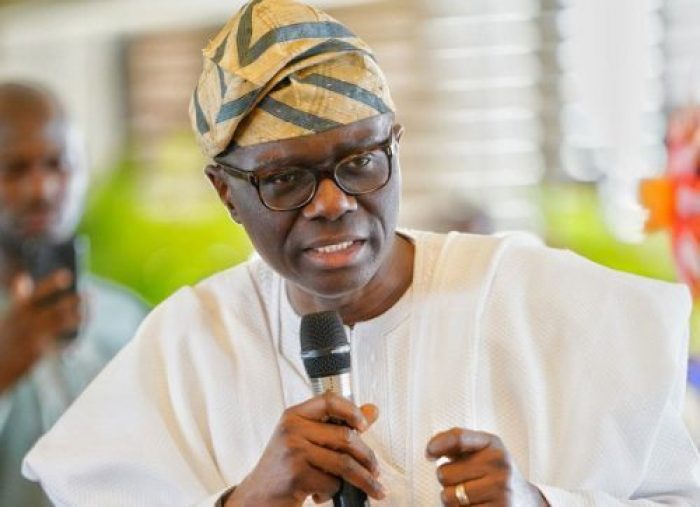
Lagos State Governor, Mr Babajide Sanwo-Olu, yesterday, signed the 2026 Appropriation Bill, tagged the “Budget of Shared Prosperity”, into law, saying it would be implemented accountably by his administration.
This comes 11 days after members of the Lagos House of Assembly approved the budget after increasing it by about N4.4 trillion from the N4.2 trillion presented by the governor in December.
Sanwo-Olu, who noted that this year’s budget was the last budget his administration would implement fully, expressed hope that residents would be the greatest beneficiaries.
He commended the Speaker, Mudashiru Obasa, and other lawmakers for their due diligence, maintaining that the Executive and Legislative would continue to work hand in hand for good governance.
Representative of the Speaker of Lagos Assembly, the Majority Speaker, Noheem Adams, commended Sanwo-Olu’s people-oriented policies, saying the budget was well scrutinised by Assembly members and was optimistic that it reflected the economic realities for the benefit of Lagosians.
Earlier, the Commissioner for Economic Planning and Budget, Ope George, said the budget of shared prosperity was designed to accelerate economic growth, deepen infrastructure development, improve the transportation system, and maintain fiscal responsibility.
Meanwhile, the Muslim Students’ Society of Nigeria (MSSN), Lagos State Area Unit, has expressed concern over recent attempts by officials of the Lagos State Government to reignite the harassment, molestation, and illegal punishment of hijab-wearing students in secondary schools across the state.
In a statement yesterday, the President of MSSN Lagos, Kamoldeen Abiona, urged Governor Babajide Sanwo-Olu to tell officials of the Ministry of Education, including tutors-general and principals, to ensure orderliness within the state’s school system.
The president’s reaction followed reports of a meeting involving school principals, education ministry officials, and the Commissioner for Basic and Secondary Education, Mr Jamiu Tolani Alli-Balogun, during which the Commissioner purportedly said the hijab must not cover school badges.
He reminded the state government that the issue reached its logical and final legal conclusion on June 17, 2022, when the Supreme Court of Nigeria affirmed the right of Muslim female students to wear the hijab.
Abiona noted that the apex court did not grant the state government or any individual official the power to dictate a design that diminishes the hijab’s essence as an act of worship.