Indications emerged yesterday of the Federal Government’s move to reboot Nigeria’s Digital Switch Over (DSO) programme, which has lingered for over two decades.
Meanwhile, the Association of Licensed Set Top Box Manufacturers of Nigeria (STBMAN) has accused the National Broadcasting Commission (NBC) of undermining due process and stalling the DSO project.
It therefore warned that continued disregard for industry concerns could further erode investor confidence.
The Guardian reports that the new move is expected to begin in May, championed by NBC and dubbed FreeTV, built on zero carriage fees, national satellite coverage and verifiable audience data.
Painfully, the document NBC presented to stakeholders on the way forward for the DSO, and made available to The Guardian, revealed that Nigeria wasted over N60 billion over 17 years, and delivered virtually nothing.
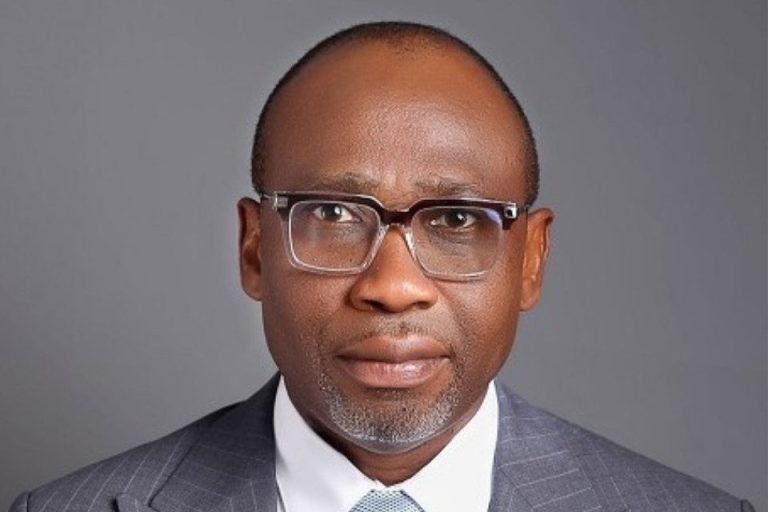
The Director-General of NBC, Dr Charles Ebuebu, acknowledged a ‘systemic breakdown’; not a single cause but a cascade of failures.
The Guardian had reported on June 21, 2023, that only eight of Nigeria’s 36 states have digital signals after nearly two decades. There is still no enforceable rate card for carriage fees. Audience measurement is nonexistent, advertisers walked away, and the fragmented state-by-state rollout destroyed broadcaster confidence.
“Without verifiable audience data, you have been flying blind,” the NBC DG stated.
The financial bleeding is staggering. According to an NBC Financial Report covering 2009 to 2025, the country spent over N60 billion on DSO with minimal results. Meanwhile, Nigeria’s total advertising market stands at N605.2 billion, but television remains severely under-monetised.
The new plan is not an upgrade, the NBC stressed. This is a rebuild, Ebuebu stressed.
Going by the document, the FreeTV platform will launch nationally on May 15, 2026, using hybrid DTH/IP delivery via NigComSat-1R. Unlike the failed encrypted model, FreeTV will be true free-to-air – no encryption, no set-top box barrier. Any DVB-T2/S2 television will work. A mobile app will extend reach to phones and tablets.
The platform will launch with over 100 national, regional and state channels across sports, news, children’s programming, education, entertainment and cultural content in Hausa, Yoruba, Igbo, Tiv, Ijaw, Edo, Fulfulde, Ibibio, Efik and Nupe – all in HD.
Crucially, the NBC has partnered with a Bulgarian firm, GARB (operating since 2006 and recognised by the European Broadcast Union), to deliver a 94 per cent-accurate audience measurement system using return-path data, app analytics, demographic panels, and Artificial Intelligence (AI).
Further analysis revealed that qualifying broadcasters, who commit their channels, produce a minimum of 60 per cent local content, and promote FreeTV will pay nothing until January 2029. After that, a regulated tiered rate card takes effect.
According to NBC, the strategic rationale is simple: build viewers first, monetise later.
The document further revealed that six regional production hubs in Lagos, Abuja, Port Harcourt, Enugu, Kano and Benin would function as local content factories, expected to generate 500 to 1,000 jobs per zone within two years.
Analogue switch-off is now binding for December 31, 2028. The era of missed deadlines, the NBC declared, ends now.
The NBC explicitly benchmarked successful transitions. It pointed to the UK’s Freeview public-private partnership (2002), South Africa’s 40 per cent surge in local content post-DSO, Kenya’s spectrum-funded rollout, and Bulgaria’s GARB measurement system. It also cited Ghana’s stalled DSO as a cautionary tale on governance confusion.
IN a statement, signed by its chairman, Godfrey Ohuabunwa, the group expressed frustration over what it described as persistent “abuse of power and processes” by the commission, alleging that regulatory decisions had consistently worked against the interests of local manufacturers and investors.
The association said recent concerns raised by the Independent Broadcasters Association of Nigeria (IBAN) reflect the broader challenges that have plagued Nigeria’s transition from analogue to digital broadcasting since discussions began in 2008.
According to STBMAN, despite nearly two decades of engagement, the DSO initiative has failed to achieve meaningful progress, with Nigeria lagging behind countries that once looked to it for guidance.
Central to the dispute is the alleged plan by the NBC to approve the importation of hybrid set-top boxes from China, an idea the manufacturers say contradicts the Federal Government’s local content policy and threatens domestic investments.
The group referenced President Bola Tinubu’s “Nigeria First” policy, arguing that prioritising imports over locally manufactured products undermines national economic objectives and discourages indigenous enterprise.
STBMAN also raised legal concerns, pointing to an existing court order in Suit No. FCT/HC/GAR/CV/442/2024, which claims that the commission’s actions could render ineffective. The association stressed that adherence to the rule of law is critical to sustaining investor trust and maintaining the integrity of the regulatory environment.