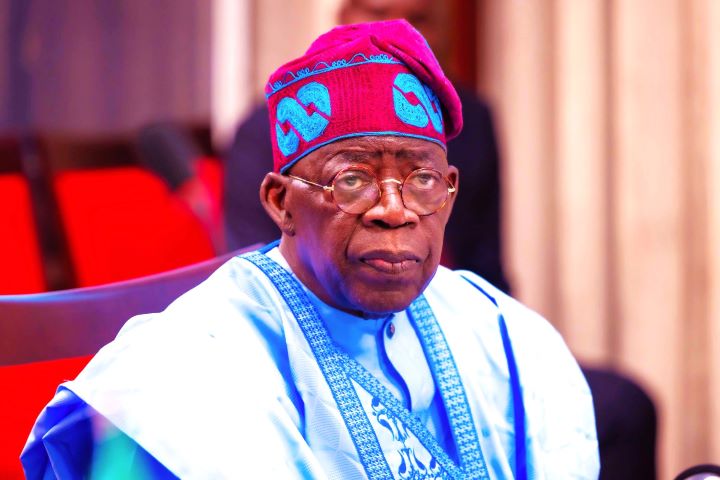
President Bola Tinubu has reset his economic team with a cabinet reshuffle that replaces the finance and housing ministers, as pressure mounts on the administration to balance ongoing reforms with measures that ease the cost-of-living strain on Nigerians.
According to a memo issued by the Office of the Secretary to the Government of the Federation (SGF) and signed by George Akume, Mr Wale Edun and Mr Ahmed Musa Dangiwa are to step down from the cabinet.
Edun, who served as Minister of Finance and Coordinating Minister of the Economy, has been directed to hand over to Mr Taiwo Oyedele, who has been elevated to assume the position. Oyedele previously served as Minister of State in the same ministry.
In a related development, Mr Muttaqha Rabe Darma has been named ministerial nominee and Minister-designate for Housing and Urban Development. The memo also directed Dangiwa to hand over to the Minister of State in the ministry.
It stated that all handover processes must be concluded on or before the close of business tomorrow.
Akume said the reshuffle is intended to strengthen cohesion and synergy in governance, and to enhance the delivery of economic benefits under the administration’s Renewed Hope Agenda. He added that the President exercised his constitutional powers under Sections 147 and 148 of the 1999 Constitution (as amended) in effecting the changes.
The President expressed appreciation to the outgoing ministers for their service and wished them success in their future endeavours.
A statement by Mr Yomi Odunuga, Special Adviser, Media and Publicity to the SGF, quoted Akume as saying efforts to reinvigorate the cabinet would remain ongoing.
Edun exits with mixed record as reforms drive gains, hardship
THE exit of Wale Edun had been anticipated within government circles, following indications late last year of possible changes amid reported differences over the direction and pace of economic policy.
Appointed in August 2023, Edun played a central role in the administration’s economic reset, coordinating fiscal policy and aligning it with monetary measures under the Central Bank of Nigeria, led by Governor Olayemi Cardoso.
His tenure featured sweeping reforms, including the removal of petrol subsidy, unification of multiple exchange rates and efforts to restructure the tax system. These measures dismantled longstanding distortions while placing pressure on households and businesses.
Macroeconomic indicators showed some improvement during the period. Gross domestic product growth rose to about 3.87 per cent in 2025 from 3.38 per cent in 2024, with gains recorded across services, agriculture and finance. Recovery in oil output and foreign exchange adjustments supported fiscal revenues and external reserves, while investor confidence improved gradually.
Edun also pursued fiscal discipline and revenue reforms, expanding the Treasury Single Account and tightening controls across government agencies. Capital expenditure exceeded N11 trillion in 2024, representing about 84 per cent performance, according to official figures.
The reforms carried high social costs. Subsidy removal and exchange rate adjustments drove inflation higher, increasing food and transport prices and reducing household purchasing power. The period became associated with a severe cost-of-living crisis. Inflation rose sharply during the period, before easing to below 15 per cent prior to the outbreak of the Middle East war.
Government interventions, including cash transfers, drew criticism over timing and coverage, with labour unions and civil society groups raising concerns about the pace of reforms and the strength of social safety nets.
Edun maintained that the policies were necessary to stabilise the economy and support long-term growth, stating that higher debt service costs reflected exchange rate adjustments and improved transparency.
His departure signals a potential shift in economic management. Analysts say his successor faces the task of sustaining macroeconomic gains while easing pressure on households.
Edun leaves office with a record defined by structural reforms and stabilising indicators, alongside intensified economic strain during the transition.