Nigeria’s inflation rate is finally showing signs of meaningful relief with easing food prices and a firmer naira pushing the key economic indicator closer to President Bola Tinubu’s 15 per cent target, offering fresh optimism for households and signalling a potential turning point in the country’s battle against the cost-of-living crisis.
According to the latest consumer price index (CPI), the inflation eased to a multi-year low of 16.05 per cent in October. The headline inflation is just 100 basis points away from converging with the government’s promised 15 per cent.
As low as the inflation rate is in relation to the extremely volatile past years, there are doubts that the National Bureau of Statistics (NBS) is not overstating the inflation figure. Some authorities claim the actual inflation rate might have slowed to a single digit.
Renaissance Capital Africa (Rencap) recently reported that Nigeria’s inflation might have slowed down to 12 per cent in October and that it will be on course to a single digit next year.
The Central Bank of Nigeria (CBN) claimed disinflation is entrenched, justifying the recent interest rate cut.
But an independent survey by The Guardian shows that most items have either dropped in prices or remained sticky year-on-year when matched with last year’s November.
In a few cases where prices have adjusted upward, the percentage differences are in the range of single digits, pushing the current market reality to deflation.
For one, most items in the food segment, the key driver of inflation, have seen a significant drop in prices. For instance, rice, the most popular staple food, has pivoted, dropping by 24 per cent in the past year. A 50kg bag averaged N92,000 in November last year. As of yesterday, most open markets sell for between N65,000 and N75,000.
The drop is even higher in the case of beans. A 100kg bag of brown beans currently trades for N75,000 – a remarkable 48 per cent drop when compared to November last year.
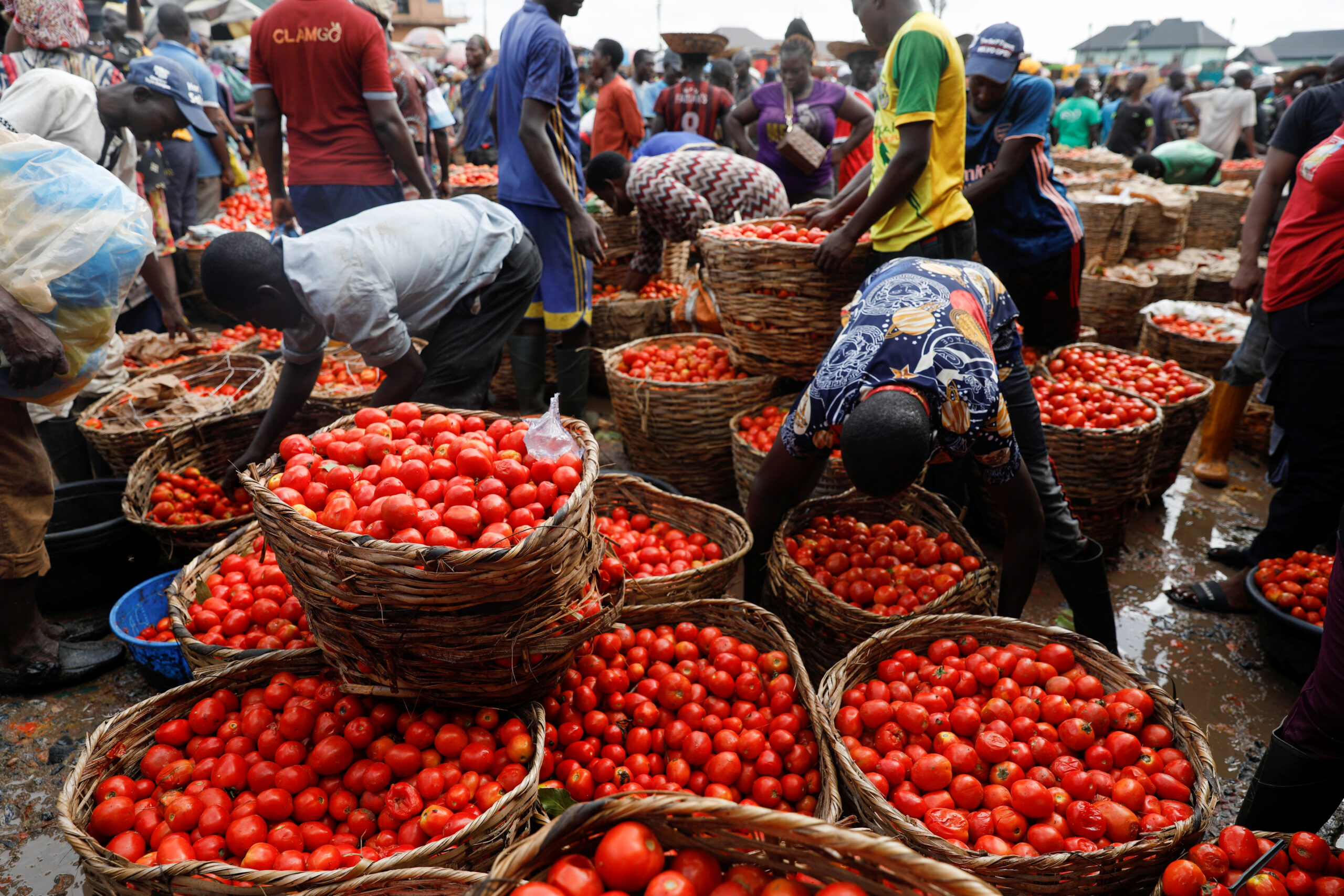
Prices of garri and onion have also fallen by as much as 40 to 70 per cent, while tomatoes and pepper have witnessed a sharp price drop by about 65 per cent.
Prices of eggs, major sources of protein, have remained unchanged, while some noodles have increased, but by a small margin.
In fashion and household, where the middle-income families play a big role, prices have remained relatively unchanged.
Prices remain upbeat in the building material market. But the speed of growth has slowed. Last November, cement prices moved up by about 17 per cent, aligning with the current inflation trend.
But prices of iron rods, roofing materials, electrical and plumbing materials have remained unchanged or slightly lower.
A firmer naira has contributed significantly to stable prices. Year-on-year, the naira has gained nearly N260 against the dollar. That is over about 15 per cent value gain in one year – a massive gain for inflation war via exchange rate pass-through effect.
Whereas the Governor of the Central Bank of Nigeria (CBN), Yemi Cardoso, is eying a single-digit inflation rate, Tinubu has repeatedly highlighted his administration’s goal of reducing the inflation rate to 15 per cent by the end of this year. The target was a key promise in his New Year’s message and the 2025 budget presentation.
But while authorities celebrate what appears to be a steady easing in inflationary pressures, economists and industry players are also warning that this could be a reprieve masking deeper weaknesses in the economy.
For instance, the crash of food prices is already unsettling farming communities are complaining of negative returns on the 2025 investments. This, relevant stakeholders have warned, could demoralise farmers and trigger withdrawal in the 2026 planting season.
NBS yesterday released its CPI for October 2025, showing that headline inflation dropped to 16.05 per cent, down from 18.02 per cent in September – its sixth consecutive monthly decline.
On a year-on-year basis, food inflation moderated to 13.12 per cent, a significant fall from the 39.16 per cent recorded in October 2024.
The numbers are bringing the government within reach of its 15 per cent inflation target for 2025.
The NBS attributes the decline largely to easing food prices – historically the strongest driver of inflation – alongside a stabilising foreign exchange market.
Analysts say improved harvest conditions and relative FX stability since April have also helped lower the cost of goods and services.
The sustained deceleration in inflation has strengthened expectations of further monetary easing by the Central Bank of Nigeria (CBN), which in September cut the Monetary Policy Rate (MPR) by 50 basis points to 27 per cent – the first rate cut since 2020.
However, core inflation contributors such as high fuel prices and elevated production costs remain stubbornly entrenched.
But there is hope that strengthening the naira value and lower inflation would trigger a cut in commercial interest rates even as the real interest rate strengthens.
Despite the positive headline figures, concerns are mounting over the impact of crashing food prices on domestic farmers.
The decline, experts insist, is being driven in part by rising food importation, which is distorting local markets and eroding the profitability of local producers.
Agriculture Minister, Senator Abubakar Kyari, recently revealed that Nigeria spends over $10 billion yearly importing items such as wheat, rice, sugar, fish and tomato paste, while agricultural exports fetch less than $400 million.
Between April 2024 and March 2025 alone, Nigeria spent $2.39 billion on food imports – 11.6 per cent higher than the previous year—despite government commitments to ramp up local production.
At the last Nigeria Economic Summit, the Emir of Kano, Sanusi Lamido Sanusi, urged the government to limit food importation as a palliative measure, warning of severe long-term consequences for local agriculture.
“In bringing down food prices, we wiped out the profit of producers. Farmers who borrowed heavily cannot compete. Mills are shutting down, farmers are going bankrupt, and banks are now saddled with non-performing loans,” he cautioned.
Several analysts argue that weakened purchasing power is also suppressing prices, not improving productivity. With incomes severely eroded by previous inflation spikes and devaluation, households are buying less, forcing farmers and food sellers to drop prices to survive.