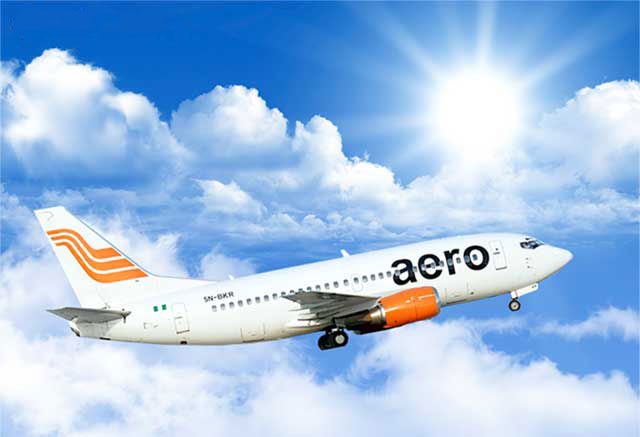
To tackle Nigeria’s worsening jet fuel shortage and price surge, the Federal Government has asked marketers to grant airline operators a 30-day credit window and sell aviation fuel directly to them.
The development is sequel to a series of high-level engagements convened by the Nigerian Midstream and Downstream Petroleum Regulatory Authority, following an earlier meeting called by the Minister of Aviation and Airspace Management on April 22-23, 2026.
The session brought together representatives from the Ministries of Aviation and Petroleum Resources, as well as major aviation agencies, including the Federal Airports Authority of Nigeria, Nigerian Airspace Management Agency, Nigerian Civil Aviation Authority, airline operators, and aviation fuel marketers.
According to a copy of the executive summary of the meeting obtained by one of our correspondents in Abuja on Monday, the stakeholders called for urgent regulatory intervention to stabilise prices, urging the authority to engage relevant bodies to review pricing components linked to international benchmarks.
“To ensure price stability, NMDPRA should engage DPRP to adjust the premium on Platts and the cost variation element that was recently increased by the refinery,” the document stated.
At the end of the deliberations, the stakeholders agreed on a new indicative pricing band based on prevailing global oil market dynamics and domestic cost considerations. “The indicative end-user price should range between N1,760 – N1,988 per litre in Lagos and N1,809 – N2,037 per litre in Abuja,” the document stated.
It added that the pricing benchmarks were derived from Platts average prices recorded between April 17 and 23, 2026, warning that prices could climb even higher outside that window.
“Products purchased outside this window may be higher due to high volatility in current prices precipitated by the U.S.-Iran war and varying operational costs by operators,” the summary noted.
In addition, the committee advised regulatory agencies to streamline airport operations by reducing the number of airside fuel distributors to only those with verifiable infrastructure and capacity.
“NMDPRA is to work with FAAN and NCAA to validate airside distributors with infrastructure to trim the number of operators based on agreed criteria,” it added.
The issue of mounting debt between airline operators and fuel marketers also featured prominently during the discussions. To resolve this, the Ministry of Aviation was tasked with facilitating a consultative meeting between both parties.
“The Ministry of Aviation should facilitate a consultative meeting between oil marketers and airline operators to resolve outstanding debts,” the communiqué said.
As part of measures to ease financial pressure on airlines, marketers were encouraged to introduce more flexible payment terms. “Marketers should consider a 30-day credit window for airlines to pay up for supplies made,” it stated.
The committee further recommended the inclusion of Aviation Turbine Kerosene under the Federal Government’s naira-for-crude initiative, which was designed to reduce dependence on foreign exchange and stabilise the cost of petroleum products.