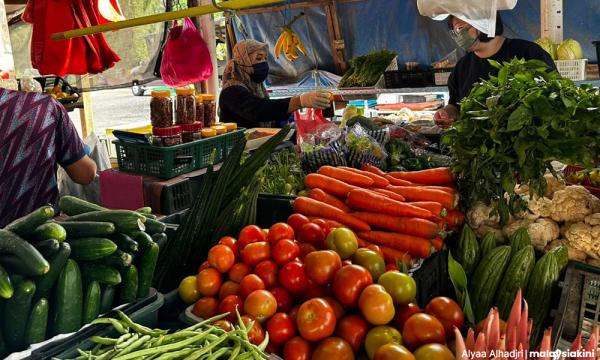
Food and beverage imports increased to N677.3bn in the first half of 2025, a 44.48 per cent rise from N468.76bn in the same period of 2024, prompting renewed calls for stronger government support to enhance local industry capacity and reduce dependency on imports.
Data from the National Bureau of Statistics showed that while the value of primary food and beverage imports mainly for household consumption surged, the value of processed food and beverages consumed by households recorded a marginal 1.85 per cent decline, falling from N699.58bn in H1 2024 to N686.81bn in H1 2025.
Meanwhile, primary food and beverage imports mainly for industrial use grew in six months by 1.37 per cent from N969.22bn to N982.49bn, while processed imports for industrial use rose by 7.28 per cent from N984.16bn to N1.06tn in the same period.
This came as members of the Organised Private Sector who spoke to The PUNCH in separate phone interviews linked the surge in food imports to weak local production, insecurity, inconsistent agricultural policy, and consumer preference for imported products perceived to have better quality and availability.
The Chairman of the Lagos Chamber of Commerce and Industry, Agricultural and Allied Group, Tunde Banjoko, said the figures reflected a lack of trust in locally produced raw materials and food items.
“From this data, what one can simply infer is that people trust the quality and integrity of imported raw materials, foodstuff, and beverages for household consumption more than what is being produced locally,” he said.
Banjoko noted that factors such as price competitiveness, quality control, and availability played significant roles in shaping consumer preferences.
He added, “We are still battling with inadequate funding to do things properly the way they ought to be done. The quality of our seedlings, the use of chemicals, and our production processes are still affecting the overall output.”
The LCCI agric group chief added that the country’s poor storage systems and weak commodity boards had worsened the problem, leading to seasonal shortages of local produce.
He advised the Federal Government to establish stronger funding mechanisms for agribusinesses and guarantee offtake systems through commodity boards to stabilise supply. “We need to get proper storage and make them available.
Commodity boards need a guarantee of offtake so that these products can be available, stored properly, and made available to the market when needed,” Banjoko stressed.
He maintained that the government must act to ensure businesses are scalable and interesting to local producers so that they can compete effectively. With the right policies, these numbers should begin to drop and ease pressure on foreign exchange,”
The President of the Association of Small Business Owners of Nigeria, Dr Femi Egbesola, explained that insecurity and low technological adoption in agriculture were among the main reasons Nigeria continued to rely on food imports.
Egbesola said, “Most of the farmers are no longer on the farms because of insecurity. Many farmlands have been deserted. That is where the primary products come from. It is when the farmers plant and harvest. That is when the manufacturers and other users can buy from them and use them as their inputs. This time, many of the farms are deserted.”
He noted that Nigeria’s agricultural productivity remained far below global standards due to the use of outdated tools and practices.
“For instance, what it takes to produce 10 tons of cassava in Nigeria requires about 30 acres of land, whereas in the Netherlands, the same 10 tons come from just three plots. That shows how far behind we are in technology use,” he said.
He urged the government to integrate technology into farming, upgrade peasant farmers, and invest in agricultural mechanisation to close the production gap.
“To Small and Medium-sized Enterprises, this wide gap presents investment opportunities. It’s a sign that there is strong business potential in local production if we can look inward and bridge these deficits,” Egbesola said.
The Director of the Centre for the Promotion of Private Enterprise, Dr Muda Yusuf, attributed the rise in food and beverage imports partly to government import waivers and increased demand for staple foods such as wheat-based products.
“The biggest driver of food imports is in the wheat value chain; bread, pastries, and noodles, which are staple foods in Nigeria,” Yusuf explained.
He said the Federal Government’s 180-day waiver to import maize and brown rice in 2024 had influenced the 2025 figures, as many of those imports entered the country early this year. “Another factor is that the data are in naira terms, and with currency depreciation, the import values appear higher even if the physical quantities are not significantly more,” he added.
Yusuf advised the government to focus on improving agricultural value chains, supporting wheat alternatives, and reducing policy inconsistencies that discourage local investors.