The Independent National Electoral Commission (INEC) has removed more than 1.6 million invalid entries from the national voters’ register and identified 54 personnel across 10 states allegedly involved in registration irregularities, warning that those found culpable would face disciplinary action and possible prosecution.
The development comes as the judiciary prepares to handle disputes arising from the 2027 general elections, with 375 judges nominated for election petition tribunals and the Chief Justice of Nigeria (CJN), Justice Kudirat Kekere-Ekun, cautioning lawyers against practices capable of undermining electoral justice.
The warning formed part of a broader call by judicial and electoral authorities for professionalism, impartiality and accountability in the conduct of elections and the resolution of disputes, amid emerging concerns over artificial intelligence-generated evidence, digital manipulation and attempts to influence judicial decisions.
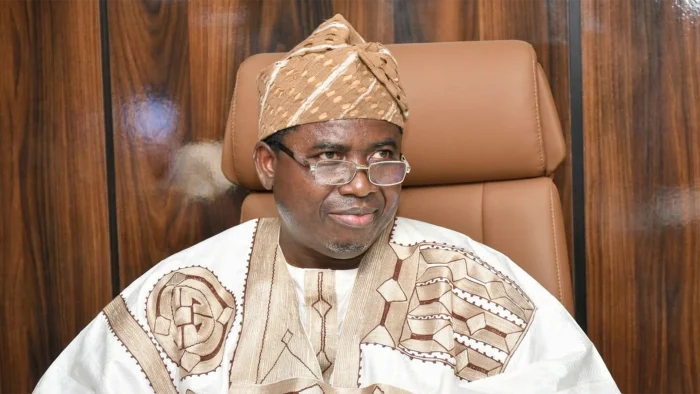
INEC Chairman, Prof. Joash Amupitan, disclosed the removal of the records yesterday in Abuja while briefing journalists on the outcome of the review of the Preliminary Register of Voters ahead of the 2027 general elections.
He said the exercise uncovered multiple registrations, manipulated photographs, irregular registration patterns and records belonging to deceased persons.
According to him, the commission harvested 11,088,238 registration records from the three phases of the 2025/2026 Continuous Voter Registration (CVR) exercise.
The Automated Biometric Identification System (ABIS) initially flagged 1,545,052 records for further examination, although he clarified that being flagged did not automatically render a registration invalid.
Of the flagged records, 1,277,052 were confirmed invalid and excluded before publication of the Preliminary Register.
Following complaints, claims and objections received during the seven-day display exercise between October 9 and 15, the commission subjected another 268,000 cases to adjudication. Of these, 217,722 were confirmed invalid and removed, while 50,278 were cleared as valid and retained.
Amupitan said additional screening subsequently identified another 113,886 invalid registrations, bringing the number of invalid entries removed during the review to 1,608,660.
The commission also removed 873 records belonging to verified deceased voters.
He explained that the current national register had evolved through successive registration and continuous voter registration exercises since 2011, resulting in the accumulation of biometric and demographic records captured under different technologies, operational arrangements and quality standards.
He acknowledged that previous cleansing exercises and biometric comparisons had addressed some concerns but said significant historical integrity issues remained.
The chairman disclosed that the commission’s technical assessment uncovered deliberate attempts to circumvent established registration procedures, including the misuse of provisions intended for exceptional registration circumstances, particularly those relating to persons with disabilities.
He said the affected records had been identified and subjected to verification and remediation, while personnel allegedly connected with the infractions had been identified for administrative investigation.
“Fifty-four persons cutting across ten States have been identified as complicit and necessary disciplinary action will be taken against them, including possible prosecution,” he said.
Amupitan, however, warned that the exercise had yet to resolve all concerns surrounding the register, as many irregularities predated the latest registration exercise.
He said most complaints involved multiple registrations and suspicious photographs circulating on social media related to historical records captured between 2011 and 2023.
According to him, the commission’s decision to defer the proposed nationwide voter revalidation exercise until after the 2027 elections did not suspend existing mechanisms for identifying and removing invalid registrations.
On allegations that artificial intelligence-generated photographs had been used to compromise voter registration, Amupitan confirmed that the commission had identified cases involving manipulated images and was introducing additional safeguards.
He said INEC had directed its Director of Information and Communication Technology to discontinue external webcam-based image uploads for voter registration, insisting that photographs should instead be captured through an approved application.
The chairman also disclosed that the commission had approved a comprehensive Artificial Intelligence Governance Framework to regulate the responsible deployment of the technology in its operations.
He said the framework, developed with partners, including the Institute for Security Studies and the British High Commission, had undergone peer review and received the commission’s approval.
Amupitan added that security agencies were conducting their own investigations into the irregularities, while cases involving suspected criminal conduct would be forwarded to appropriate law enforcement agencies for prosecution.
He maintained that existing safeguards, including the Bimodal Voter Accreditation System (BVAS), would prevent multiple accreditation and voting during the elections.
He explained that voters would be required to appear physically at their designated polling units for biometric authentication through fingerprints or facial recognition.
Meanwhile, the commission said final reconciliation, quality assurance and publication checks were ongoing ahead of the release of the Final Register on December 15, 2026.
THE preparations for the 2027 election petitions also featured a warning by Kekere-Ekun to lawyers against filing multiple suits on the same subject matter, seeking conflicting orders from courts of coordinate jurisdiction and using ex parte applications to gain tactical advantages in electoral disputes.
She gave the warning in Abuja while addressing judges nominated to serve on the 2027 Election Petition Tribunals during their swearing-in ceremony and a capacity-building workshop organised by the Court of Appeal.
The CJN said such practices could undermine the administration of justice and turn the courts into instruments of political contest.
With the presidential and National Assembly elections scheduled for January 16, 2027, and governorship and State Houses of Assembly elections fixed for February 6, she said public confidence in the electoral process would depend partly on the ability of the courts to resolve disputes fairly and within the timelines prescribed by law.
Kekere-Ekun cautioned judges against allowing political interests, public opinion or pressure from influential individuals to influence their decisions, stressing that election petitions must be determined strictly based on pleadings, evidence and applicable laws.
She said the popularity of a candidate, intensity of public opinion or influence of political interests could not substitute for legal proof.
“The courtroom must not become an extension of the political arena. Disputes must be resolved on the basis of the pleadings, evidence and applicable law,” she said.
She reminded the judges that their judicial oath required them to administer justice without fear or favour, affection or ill will, adding that election adjudication demanded courage, patience, professional discipline and impartiality.
The CJN also warned political parties, candidates and their supporters against intimidating judicial officers or taking actions capable of undermining confidence in the adjudicatory process.
She extended the caution to social media users and media organisations, urging them to exercise restraint in circulating information about pending election disputes.
The President of the Court of Appeal, Justice Monica Dongban-Mensem, disclosed that 375 judicial officers had been nominated to serve on the 2027 Election Petition Tribunals across the country.
She said 138 of the nominees were returning members with previous tribunal experience, while 237 were newly nominated.
According to her, the selection followed consultations with heads of courts and the Nigerian Bar Association, based on professional competence, integrity, judicial temperament and experience.
She charged the judges to resist political pressure, inducement, intimidation and personal relationships capable of compromising their independence.
Dongban-Mensem also urged tribunal members to discourage unnecessary adjournments, warning that procedural indulgence must not frustrate timely adjudication.
She disclosed that the Court of Appeal had introduced a centralised Case Management System to facilitate the scanning, uploading, storage and accessibility of judicial decisions, while monitoring case performance across the 36 states and the Federal Capital Territory.
She said an electronic filing portal had also been introduced to facilitate the filing and service of court processes, reduce administrative burdens and improve transparency.
The court, she added, had produced the second edition of the Judicial Electoral Manual, 2026, incorporating amendments under the Electoral Act 2026 and the Election Judicial Proceedings Practice Directions, 2026.
ALSO addressing the judges, the INEC chairman warned that the 2027 election tribunals would face increasingly complex disputes arising from electronic transmission of results, voter accreditation, digital records and artificial intelligence.
He said the deployment of BVAS and the INEC Result Viewing Portal (IReV) had introduced new evidential questions requiring judges to develop a sound understanding of electoral technology.
According to him, disputes could arise over the authenticity, admissibility and probative value of electronic records, as well as their relationship with physical result sheets.
He cautioned that technology should neither be treated as infallible nor dismissed simply because evidence was generated electronically.
The INEC chairman also identified AI-generated audio recordings, deepfake videos and fabricated election declarations as emerging threats capable of misleading voters and complicating election litigation.
He warned that fabricated digital materials could be presented before tribunals as evidence of electoral malpractice, while genuine recordings could equally be dismissed as AI-generated content.
Describing the latter as the “Liar’s Dividend”, he urged tribunals to pay particular attention to digital provenance, forensic chain of custody and certified records obtained directly from INEC when assessing electronic evidence.
The Attorney-General of the Federation and Minister of Justice, Lateef Fagbemi, called for additional election tribunal panels in jurisdictions expected to receive high volumes of petitions.
He said the volume of election disputes varied across jurisdictions and that multiple panels in areas with particularly high numbers of petitions could improve efficiency and help tribunals meet constitutional deadlines.
Fagbemi also urged the Court of Appeal to exercise care in selecting tribunal registrars, noting that their administrative competence and experience were critical to the effective handling of election petitions.
He called on the Nigerian Bar Association to develop ethical guidelines or a code of conduct for lawyers involved in election-related litigation to promote professionalism, restraint and respect for judicial processes.
Highlighting provisions of the Electoral Act 2026, he identified mandatory digital membership registers for political parties, restrictions on judicial intervention in internal party affairs, the abolition of indirect primaries and increased campaign expenditure limits.
Other provisions included mandatory deployment of BVAS and restrictions on the grounds for challenging election results.
He said the impact of the new legislation would depend largely on effective enforcement by INEC, compliance by political parties and judicial interpretation.
Meanwhile, the Human Rights Writers Association of Nigeria (HURIWA) has warned the 375 judges nominated for the election petition tribunals against compromising their integrity through financial inducements or political pressure.
In a statement, its National Coordinator, Comrade Emmanuel Onwubiko, described the 2027 post-election period as a defining test for the judiciary and the country’s democracy.
He cautioned that politicians must not be allowed to overturn voters’ choices through questionable court judgments and alleged financial inducements.
The association called on the Economic and Financial Crimes Commission (EFCC) and the Independent Corrupt Practices and Other Related Offences Commission (ICPC) to intensify monitoring of credible allegations of financial inducement, suspicious transactions and attempts to compromise election petition proceedings.
It also urged the Code of Conduct Bureau to strengthen monitoring of judges’ asset declarations and ensure that relevant information was accessible in accordance with the law.
HURIWA challenged INEC to ensure that the 2027 elections were credible and reflected voters’ choices at polling units, arguing that election tribunals should resolve genuine disputes rather than determine who governs because electoral institutions failed to protect the people’s mandate.
The group maintained that the ultimate responsibility of tribunal judges was to defend the Constitution, uphold the evidence and protect the mandate freely given by Nigerians.
In a related development, INEC has urged journalists to uphold objective, accurate and verifiable reporting ahead of the 2027 general elections.
The National Commissioner and Chairman of the Information and Voter Education Committee, Mohammed Haruna, gave the charge at an INEC forum for members of the Nigeria Union of Journalists and media executives in Enugu.
Represented by the Enugu State Resident Electoral Commissioner, Dr Chukwuemeka Chukwu, Haruna said accurate election reporting was a public service that strengthened the electoral process rather than a favour to the commission.
He urged journalists to verify information, particularly controversial reports, distinguish news from political advertising, avoid hate speech and inflammatory language, give fair coverage to candidates and parties, and correct errors promptly.