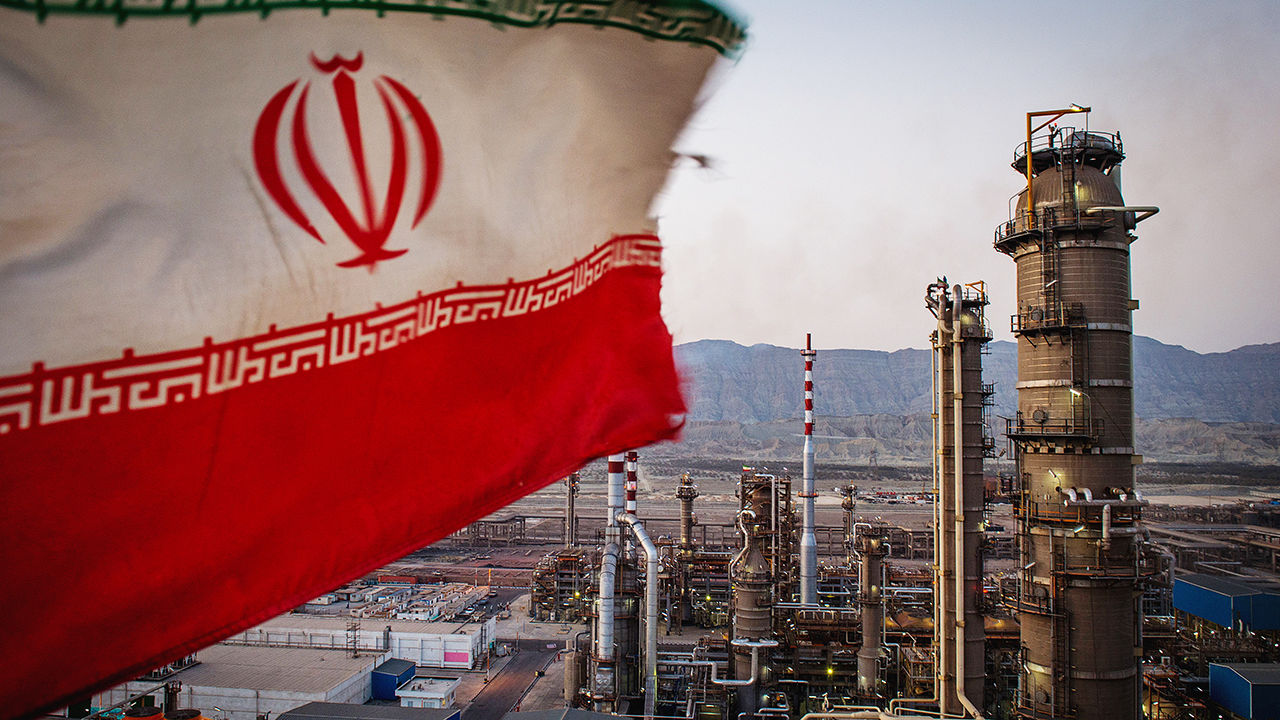
Nigeria could earn an extra $1.3 billion in crude sales in March as spiralling Middle East tensions threaten to trigger a supply shock that may see prices rally to $100 to $150 per barrel amid widespread fears of a possible disruption of the Strait of Hormuz.
The fiscal gain, however, may cause a significant short-term shock to household income, with fear that pump prices of petroleum products, especially premium motor spirit (PMS), may rally to N1,200 per litre.
This comes as stakeholders also insist that a protracted conflict could rattle global trade, stoke recession for many economies, and cause significant financial strains on struggling households, especially in economies where social support is weak.
The heightened tension may trigger dumping of risky assets and capital flight from emerging markets as investors prioritise safety over return. There are fears that the stock market, which has had a significant bull run since the beginning of the year, could see significant profit-taking in the coming weeks and the exit of foreigners.
Following the invasion of Iran by Israel and the United States, the death of Iran’s Supreme Leader, Ayatollah Ali Khamenei and escalating attacks across Middle East, especially United Arab Emirates (UAE), Saudi Arabia, Qatar and Bahrain, global shipping routes, particularly in the Persian Gulf have already faced disruption with over 150 oil tankers already stranded outside the Strait of Hormuz.
The crisis is causing a ripple effect across the globe. In Nigeria, members of the Islamic Movement in Nigeria (IMN) yesterday staged protests in some northern states over Khamenei’s death, a development which stakeholders insisted has far-reaching security implications and a spiralling humanitarian crisis for a stressed and lean United Nations (UN).
Shipping sources had confirmed to Sky News that at least 150 oil tankers were waiting outside the Strait amid mounting security concerns, while several international carriers have suspended or rerouted vessels.
France’s CMA CGM, the world’s third-largest container shipping line, has reportedly instructed vessels in the Gulf to take shelter and halt certain routes.
As development escalates, the sources said some vessels are diverting around the Cape of Good Hope, increasing journey times, freight charges and war-risk insurance premiums.
The UK Maritime Trade Operations (UKMTO) also reported that a vessel north of Oman and east of the Strait had been struck by an unknown projectile, further heightening market anxiety.
An official of the European Union told Reuters that vessels transiting the Strait have received very high frequency transmissions from Iran’s Islamic Revolutionary Guard Corps, warning that “no ship is allowed to pass”.
Amidst the tension, Iran’s Foreign Minister Abbas Araghchi told Al Jazeera that Tehran has no intention “at this stage” to close the Strait or disrupt navigation.
Nigeria has been struggling to sell its crude oil as Platts cited a document from the Nigerian National Petroleum Company Limited, which was dated February 26, to show the company lowered the Nigerian NNPC Selling Prices (NSPs). By implication, four of the 37 grades of NSPs saw a rise month-over-month.
Yesterday, most Nigerian grades were unusually trailing Brent at $71 per barrel oil price.
As Africa’s largest crude exporter, Nigeria depends on oil for over 85 per cent of export earnings and roughly half of government revenue. A sustained rise in prices directly strengthens fiscal receipts, foreign exchange inflows and statutory allocations to the three tiers of government.
But a sharp increase in crude also means an upward rise in prices of refined products. With subsidy fully removed from the downstream market, a rise in crude also means paying more for PMS and other by-products, which is an upside risk to inflation.
Nigeria’s crude production rose to 1.459 million barrels per day in January 2026, according to official submissions to the Organisation of the Petroleum Exporting Countries (OPEC). At current output levels, a sharp upward swing in global prices could translate into substantial additional export earnings in the short term.
The rise, if the price eventually jumps to $100 per barrel, according to stakeholders, would see Nigeria earn an additional $29 per barrel, which may translate to about $1.3 billion in future earnings.
The geopolitical uncertainty also comes as eight OPEC+ countries, including Saudi Arabia, Russia, Iraq, UAE, Kuwait, Kazakhstan, Algeria and Oman, yesterday began unwinding 1.65 million barrels per day of voluntary production cuts announced in 2023.
The group agreed to a production adjustment of 206,000 barrels per day effective April 2026, while retaining flexibility to reverse course if market conditions deteriorate.
Chief Executive Officer of the Centre for the Promotion of Private Enterprise (CPPE), Dr Muda Yusuf, said higher crude prices would boost export receipts and external reserves but cautioned that gains depend on Nigeria’s ability to sustain output at between 1.4 and 1.6 million barrels per day. That would mean de-risking against persistent oil theft, pipeline vandalism and underinvestment.
Yusuf warned that while government revenues may improve, domestic inflationary pressures would intensify under the deregulated petroleum pricing regime.
“Higher global crude prices will translate into higher petrol, diesel and transport costs locally. The knock-on effects on food prices and manufacturing will deepen cost-of-living pressures,” he said.
Market watchers estimate that if Brent crude approaches $120 or beyond, pump prices of PMS could climb towards N1,200 per litre, particularly as import parity benchmarks adjust upward.
Nigeria no longer operates a petrol subsidy regime, meaning refiners and importers purchase crude and refined products at prevailing international prices and pass attendant costs to consumers.
Partner at Kreston Pedabo, Olufemi Idowu, noted that although refineries such as the Dangote Petroleum Refinery source crude locally from NNPC Limited, transactions are conducted in dollars at international rates.
“Rising crude prices will increase domestic refining costs. Fuel prices at home will likely increase, adding to inflationary pressures,” he said.
But the change in the nominal price of PMS or any other derivative comes with a complex costing system. If more dollar earnings significantly strengthen the naira, the exchange rate gain could also reduce the rate of increase in the finished products.
Managing Partner at Nextier, Prof. Ndu Nwokolo, said markets respond more to uncertainty than risk and that the proxy nature of the conflict, with potential strikes on Saudi Arabia, the UAE, Qatar and Bahrain, heightens volatility.
“If any oil infrastructure is hit, uncertainty will increase further and prices will spike. Nigeria will earn more from crude sales, but local pump prices will also rise,” he said.