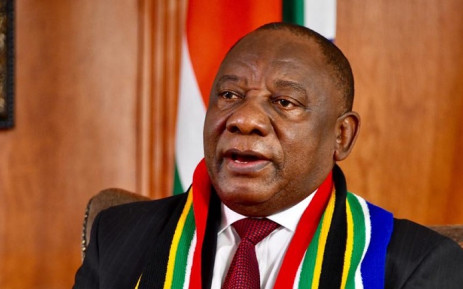
South African President Cyril Ramaphosa says the ongoing repatriation of undocumented foreign nationals from South Africa is being conducted on a voluntary basis.
He said the process is being managed in cooperation with the governments of affected countries and international refugee bodies.
The President spoke while addressing the press on Thursday, addressing growing concerns over undocumented immigration and the wave of xenophobic tensions that have swept parts of South Africa in recent months.
“We are managing, together with other governments, the process of repatriation, and these are all voluntary repatriation processes,” he said.
Ramaphosa said he had personally engaged the heads of state of countries affected by the crisis.
He said most of them acknowledged that migration challenges were not unique to South Africa and had occurred in other parts of the world.
“They say what they would want to see is that the human rights of all concerned, both South Africans and foreign nationals, should be respected. That is precisely what I have been stressing,” he said.
The President insisted that no member of the public had the right to question or profile anyone over their nationality. He said only government officials were authorized to carry out such checks.
“Nobody has the right to approach anyone and ask who they are, where they come from, and all that. That is the sole role of the government,” he said.
Ramaphosa said his administration had set up repatriation camps in several locations, particularly in Musina, Limpopo, near the border with Zimbabwe.
He said the facility was working well and had drawn commendation from foreign governments and non-governmental monitors, including international refugee bodies.
The Temporary Repatriation Processing Centre outside Musina, built on government-owned farmland, has processed more than 45,000 undocumented foreign nationals since it opened on July 2, according to a Parliamentary Communication Services statement.
More than 50,000 migrants have left South Africa through various border posts since the xenophobic unrest intensified.
Ramaphosa said his government had taken note of concerns raised by South Africans over the effects of undocumented migration.
He listed measures including tighter border security, stricter enforcement of labour laws, and sanctions against employers who hire undocumented workers.
“We are becoming more and more successful,” he said, adding that the government would continue to give leadership on the matter.
The renewed xenophobic tensions, which trace back to a June 30 deadline set by anti-immigrant groups for undocumented migrants to leave the country, have led to deaths, looting, and attacks in cities including Johannesburg and Durban.
The unrest has also strained diplomatic relations with countries such as Nigeria and Ghana, whose nationals have featured among those affected.
Nigeria has continued to evacuate its citizens from South Africa in response to the crisis.
A fourth batch of 287 Nigerians, comprising 272 adults and 12 infants, departed Oliver Tambo International Airport on Thursday, the Minister of Foreign Affairs, Bianca Odumegwu-Ojukwu, said in a statement.
She said the evacuation went ahead despite the original Air Peace aircraft being grounded after its windscreen reportedly shattered in Johannesburg, with the airline swiftly deploying a replacement plane.
The latest flight brings the number of Nigerians repatriated to more than 1,700 since the unrest began, with over 1,000 others still registered for voluntary return with the Nigerians in Diaspora Commission.