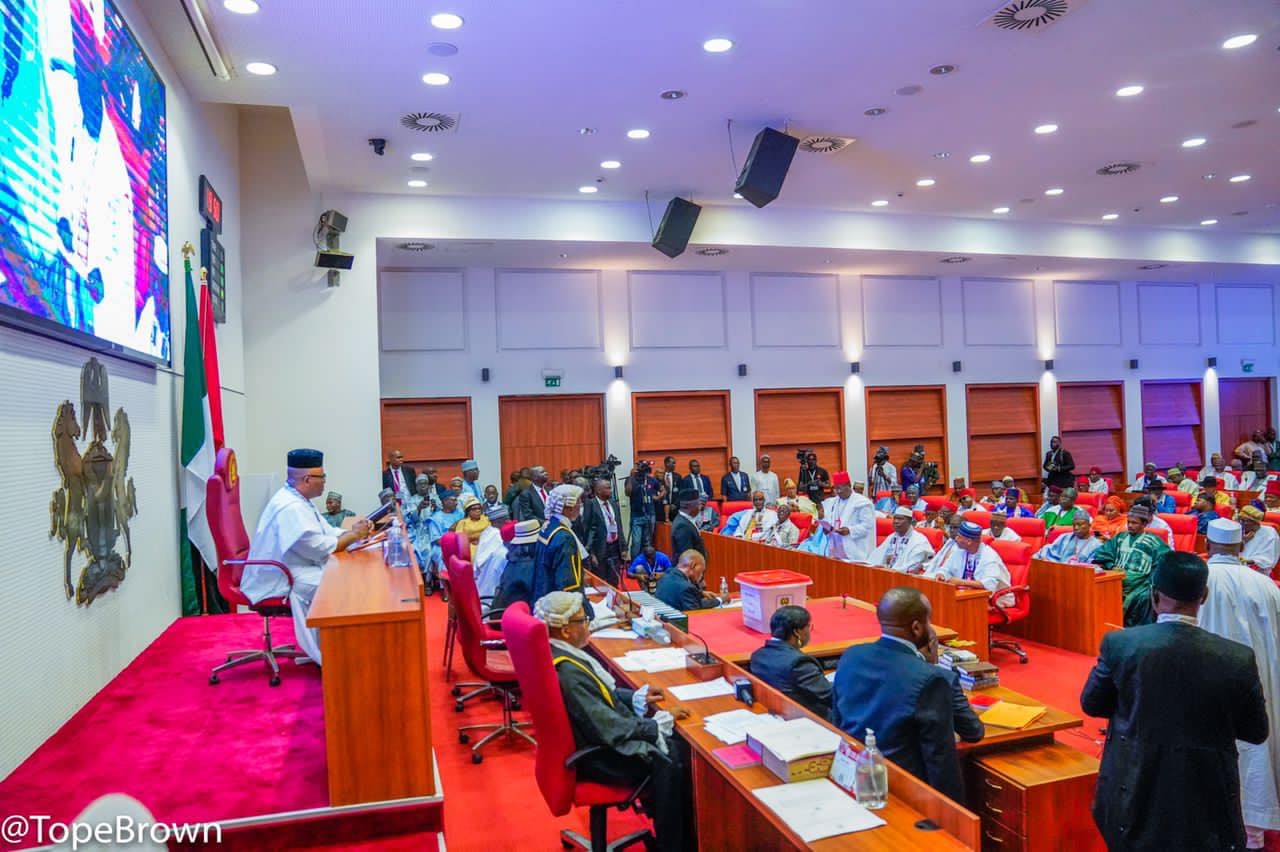
The Senate has suspended further legislative action on a bill seeking to establish a Nigerian Coast Guard, opting instead for wider consultations amid concerns that the proposed agency could duplicate the responsibilities of existing maritime security institutions.
The decision came during plenary on Wednesday after lawmakers debated the measure, which had already progressed through committee scrutiny and was awaiting final passage.
Announcing the development, Senate President Godswill Akpabio said several senators expressed reservations that creating another maritime security body without a clearly defined operational framework could create jurisdictional conflicts with the Nigerian Navy and the Marine Police.
According to him, lawmakers agreed that strengthening existing institutions may be a more practical approach unless the proposed Coast Guard’s responsibilities are distinctly separated from those of agencies already operating in Nigeria’s maritime domain.
He maintained that the Senate was not abandoning the legislation but merely stepping it down to allow for broader stakeholder engagement and refinement of its provisions before it returns for consideration.
The proposed legislation, sponsored by Senator Wasiu Eshinlokun, seeks to establish a specialised maritime security agency under the Federal Ministry of Marine and Blue Economy to enhance safety on Nigeria’s waterways, protect maritime assets, combat illegal fishing and support law enforcement across the country’s coastal environment.
Presenting the report of the Senate Committee on Marine Transport, Eshinlokun argued that stakeholders who participated in the public hearing strongly supported the establishment of the Coast Guard, describing it as a critical institution for improving maritime governance and unlocking greater economic opportunities within the blue economy.
He said the committee had reviewed the bill to address concerns over duplication by redefining the proposed Coast Guard as a specialised maritime security institution rather than a military service. He added that amendments were also introduced to clearly outline its operational mandate and limit its activities to maritime safety, commercial shipping, cargo operations and other civilian maritime responsibilities within Nigeria’s territorial waters.
The lawmaker insisted that the proposed agency would complement—not compete with—existing security organisations by enhancing inter-agency coordination, boosting investor confidence and strengthening maritime safety.
Despite the assurances, the Senate resolved that further consultations were necessary before taking a final decision on the legislation, reflecting lawmakers’ determination to avoid institutional overlap while pursuing reforms aimed at improving security and economic activities in Nigeria’s maritime sector.