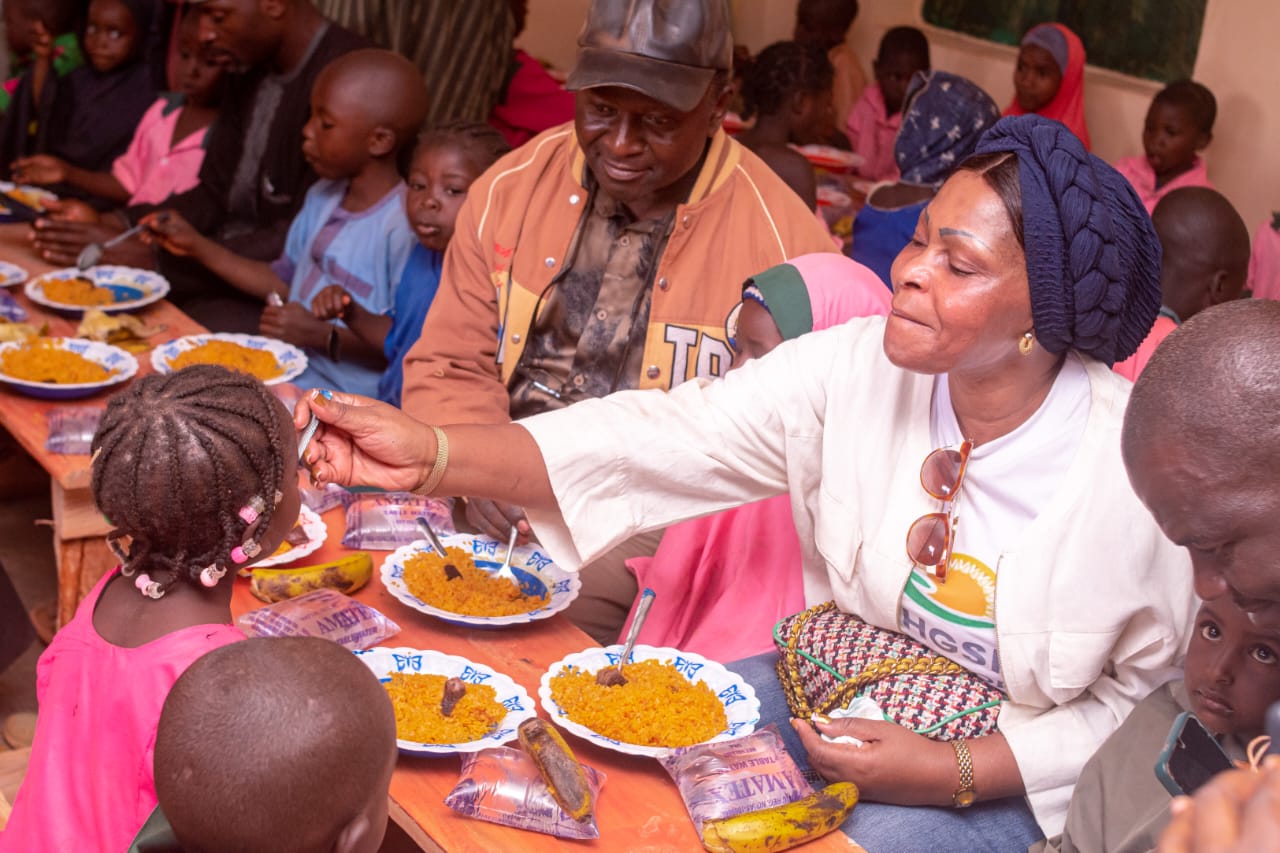
The fate of over nine million pupils hangs in the balance as uncertainty clouds the Federal Government’s National Home Grown School Feeding Programme (NHGSFP).
The programme’s uncertain future, with the end of H1 2025, threatens the livelihoods of over 250,000 individuals, including cooks, farmers, and other stakeholders, who depend on it for income.
Before its suspension in January 2024, the programme had created about 34,869 direct jobs for cooks and other staff involved in the food preparation and distribution process.
It indirectly supports the livelihoods of an estimated 80,000 farmers, 127,000 food vendors, and 100 aggregators across 30 states. The scheme aimed at enhancing the health, wellbeing, and educational outcomes of pupils by providing them with nutritious meals, encouraging school attendance towards improved educational outcomes.
Recall that the current administration, in January 2024, suspended all programmes administered by the National Social Investment Programme Agency (NSIPA), including the Home Grown School Feeding Programme, after the then Chief Executive Officer of NSIPA, Halima Shehu, was suspended over alleged financial malfeasance. Tinubu later suspended the Minister of Humanitarian Affairs, Beta Edu.
Though a panel was set up to review the programme in 2024, the initiative is yet to commence 18 months after its withdrawal. Findings, however, revealed that the government has continued to make a budget for the initiative, with N160 billion set aside for the scheme in the N54.9 trillion 2025 budget.
A breakdown of the amount showed that while N100 billion is under the Service Wide Vote (SVW) and domiciled in the Ministry of Budget and Economic Planning, the Ministry of Education will oversee another N60 billion for the feeding of primary school pupils.
But rising inflation rates have cast a shadow over the timely implementation of the scheme. Not only that, the increasing costs of food, transportation, and other essential components of the programme have raised concerns that the N160 billion budgetary allocation may no longer be sufficient to support its objectives.
The programme got N100 billion budget in 2024, and a far cry from the estimated N540 billion required to feed 10 million schoolchildren, with concerns on its sustainability in the face of galloping inflation.
It was earlier reported that the N70 per day meal was raised to N100. It is still unclear how a N100 meal will fetch one pupil a nutritious meal. For instance, an egg now sells for N250 (about N50 when the scheme started, and N150 in 2024). With an egg-a-day projection and galloping inflation, the government might run out of cash sooner rather than later before the budget reaches the halfway line.
A recent food prices survey by The Guardian indicated that prices of commodities have more than doubled, making people worry about when the school feeding programme will be reactivated and how the scheme will be funded.
The Guardian’s recent price checks revealed that a bag of rice (50kg) that sold for N26,000 in early 2023, N100,000 in 2025 and now costs N85,000. Therefore, if the Federal Government previously paid N100 million for bags of rice, to do so this year will require three times that amount. For garri (50kg), it was N18,000 in 2023 and now sells for N45,000; yam tuber that previously sold for N450 last year will cost twice the price to buy now, and beans sold for N28,000 in 2023, currently sells for N75,000 per bag.
Stakeholders maintain that as inflation continues to erode the purchasing power of allocated funds, the programme’s administrators may be forced to either reduce the scope of the initiative or delay its implementation until additional funding can be secured.
A stark illustration of the escalating prices can be seen in the cost of a single egg, which has surged dramatically from N120 in 2024 to N250, representing a whopping 108 per cent increase.
According to stakeholders, the delayed implementation of the programme could have far-reaching consequences, including exacerbating the already alarming number of out-of-school children, which the United Nations Children’s Fund (UNICEF) puts at 20 million, as well as bring about decreased programme participation rates, reduced nutritional benefits for students, and diminished economic benefits for local farmers and communities, ultimately perpetuating cycles of poverty and food insecurity.
It would be recalled that during the administration of former President Muhammadu Buhari, the NHGSFP faced significant challenges, as the absence of food vendors, poor-quality food, small portions, and non-payment to vendors threatened its sustainability.
Additional probes uncovered a disturbing discovery when approximately N2.67 billion earmarked for school feeding programmes in Unity colleges during the COVID-19 pandemic was instead found in personal bank accounts. This sparked serious concerns about embezzlement and gross financial mismanagement.
Before now, the NSIPA had been embroiled in a prolonged corruption scandal and inefficiency in the distribution process. This development cast a shadow over the agency’s operations for several months, raising concerns about the misuse of funds, lack of transparency, and potential embezzlement.