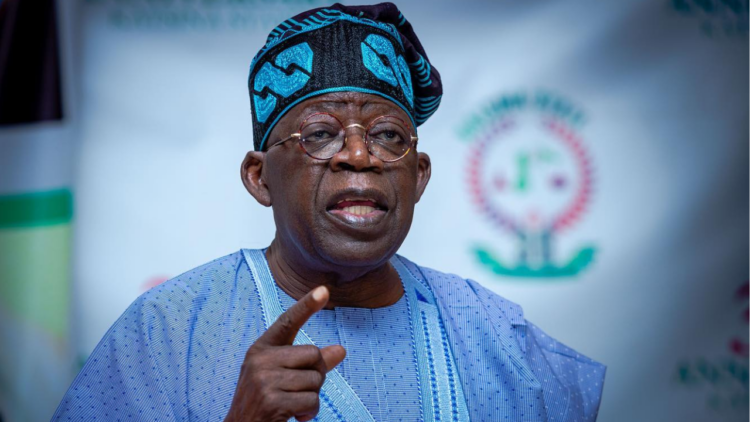
Tomorrow’s National Executive Committee (NEC) meeting of the All Progressives Congress (APC) is set to be one of the party’s most politically charged gatherings since its formation, especially with the 2027 general elections approaching.
The NEC is expected to confront a host of contentious issues, including deepening internal divisions, zoning controversies, the influx of defectors, governance concerns, and a growing leadership crisis. The meeting, reportedly backed by the president, may play a pivotal role in shaping the party’s direction over the next 18 months.
There is no indication that the meeting will entertain a vote of confidence in President Bola Tinubu, to avoid provoking dissent or triggering a repeat of the Gombe State debacle.
Dominating discussions will likely be the sensitive issue of zoning for elective and appointive positions within the party, particularly as opposition forces mobilise to prevent President Tinubu from retaining the presidency in 2027.
There has been ongoing speculation about a plot to alter the composition of the 2027 presidential ticket, fuelling rumours that Vice President Kashim Shettima may be replaced.
The move to replace Shettima gained momentum following the last NEC meeting, which controversially zoned the office of the party’s national chairman to the North-West—away from the North-Central, which had traditionally held the position.
In what appears to be a hasty attempt to correct that perceived injustice, tomorrow’s NEC meeting was convened. Also on the agenda is the ratification of the outcomes of state congresses and standing committees.
While those items are expected to dominate proceedings, party sources told The Guardian that President Tinubu, as the party leader, may also raise additional matters for discussion when the council is formally convened.
Among the issues the President is reportedly keeping close to his chest is a potential cabinet reshuffle, which could see some ministers removed to accommodate emerging political interests, especially in light of recent defections to the party.
As part of efforts to counter opposition coalitions and maintain a strong base, President Tinubu is reportedly intensifying consultations with political heavyweights, particularly in the North.
One such significant meeting was a recent private encounter with Kano political strongman, Rabiu Musa Kwankwaso, who is believed to be laying down preconditions for his possible return to the APC along with his influential Kwankwasiyya movement.
Although APC leaders have yet to publicly link Kwankwaso’s speculated return with the sudden resignation of former national chairman, Dr Abdullahi Umar Ganduje, signs suggest a strong connection between the two developments.
Ahead of tomorrow’s caucus and NEC meetings, party insiders say there is still uncertainty about who President Tinubu might endorse for the position of substantive national chairman.
While many party chieftains are unsure whether Kwankwaso would accept the role vacated by Ganduje, they acknowledge that the final decision rests with President Tinubu and the Hope Uzodimma-led Progressive Governors Forum (PGF).
Ganduje stepped down from the position last month, citing the need to take a break from active politics to address personal health issues. His exit has created a significant vacuum that could affect the party’s organisation and preparedness for upcoming by-elections, including gubernatorial polls in Anambra, Ekiti and Osun states.
Among the top agenda items for the Acting National Chairman, Ali Bukar Dalori, will be the ratification of the schedule for congresses and standing committees, as well as an update on the party’s e-registration process across the 36 states.
At the core of the lobbying for the national chairmanship is the debate over whether the position should remain in the North-West—Ganduje’s zone—where Kwankwaso, a former Kano State governor and 2023 presidential candidate of the New Nigerian Peoples Party (NNPP), is being considered as a possible successor.
However, other stakeholders are pressing for the seat to return to the North-Central, where it was zoned initially before the 2022 adjustment. They argue that returning it to the North-Central would ensure historical fairness and maintain internal party balance.
As the quiet tussle over the zoning of the APC national chairmanship slot reaches fever pitch, a foundation member of the party from the Congress for Progressives Change (CPC) bloc headed by the late President Muhammadu Buhari, Mr Osita Okechukwu, appealed to President Bola Tinubu to use the powers of his office to nominate a foundation member of the party as national chairman. He argued that the nominee must understand the party’s origins and must have “suffered in opposition before the party’s registration in 2013” for NEC approval.
While noting that he is not a member of the APC NEC, Okechukwu stated that one of the key items for the meeting would be choosing a successor to the immediate past chairman, Umar Ganduje, and emphasised that the party needs to approve a broad-minded individual for the position.
He stressed that only a chairman with such qualities would “passionately and justly reconcile factions, in order to remedy all manner of despondency, which cost the party dearly in previous elections, especially in the South-East region.”
He stated: “The factions bedevilled APC’s electoral fortunes in previous elections in the South-East. Those who were aggravated either abstained from voting or voted against us.
“I am not an officer of the party, but a foundation member of the All Progressives Congress, South-East geopolitical zone, whose interest is the victory of President Bola Ahmed Tinubu in the 2027 presidential election.
“Secondly, we are also appealing for the nomination of a true progressive as chairman, who will adhere to the fine tenets of our progressive manifesto, constitution, and accordingly advise our governors and Mr President.
“Thirdly, the chairman should come from the North-Central in our zoning tradition and in the interest of justice, fairness and sense of belonging.”
Okechukwu underscored the need for reconciliation within the APC as the 2027 general elections approach. He lamented: “Is it not a paradox that those who blatantly undermined intra-party democracy, imposed party leadership at ward, local government areas and state level and scored the poorest result in the South-East for Mr President are the ones holding appointments?”
Speaking on the lack of proper recognition and reward mechanisms in the party, Okechukwu, a former Director-General of the Voice of Nigeria, said: “These are the same people who blocked reconciliation efforts made by the former chairman Senator Adamu Abdullahi, rendered the findings null and void and consigned them to the cupboard.
“Ironically, they captured the few appointments; whereas we paid dearly as the electorate punished our great party for crass impunity and abuse of internal party democracy, which office holders committed.”