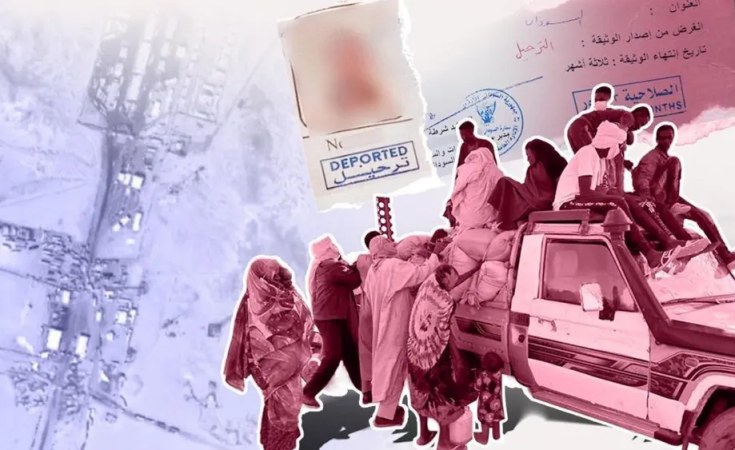
Deportations of Sudanese refugees escaping the world’s largest humanitarian crisis for safety in neighbouring Egypt have accelerated over the past 12 months, escalating a campaign of repression that was exposed in a joint investigation by The New Humanitarian and the Refugees Platform in Egypt last year.
Critics say the UN’s refugee agency (UNHCR) – the main international organisation in Egypt mandated to protect and advocate for refugees – has failed to mount a sustained challenge to the crackdown, arguing that it prioritises preserving relations with the government over defending refugee rights.
“[Security forces] threatened me, my wife, even my family by phone and in the street,” said Osman Yaqoub Mansur, who left Darfur for Egypt more than a decade ago and later founded the African Vision School for Sudanese Education, a grassroots initiative in Cairo that gave classes to Sudanese children and adults, including refugees.
Mansur said authorities raided his premises last summer, and detained him on false accusations that he had taught students that land disputed between Sudan and Egypt belonged to Sudan. He said he contacted UNHCR but was told simply to “keep moving” as threats forced him to shift from place to place across the capital.
Some 1.5 million Sudanese have crossed into Egypt since the outbreak of the more than two-and-a-half-year war between the national army and the paramilitary Rapid Support Forces. But the refugees, among 11.5 million displaced by the still-escalating conflict, have faced scapegoating from politicians amid a deepening economic crisis.
Last year’s investigation revealed that large-scale illegal deportations of thousands of Sudanese were secretly being carried out in violation of international refugee conventions that Egypt had long ratified. The investigation exposed the locations of the squalid facilities where security services were detaining people.
Follow-up reporting – based on newly obtained material from local refugee organisations, leaked Egyptian government documents, and testimonies from dozens of refugees and lawyers gathered over more than a year – reveals a further escalation in the deportation campaign.
Far more refugees are now being detained and deported, with security services carrying out sweeps and stops not only in border areas where people enter the country but deep inside major cities. Authorities have also targeted refugee-led initiatives, including by shutting down dozens of Sudanese-run schools.
The crackdown comes as the EU has pledged large sums to Egypt in exchange for it curbing migration to Europe – a deal mirroring similar agreements with other transit countries, and which risks making the bloc complicit in abuses by the Egyptian government, which did not respond to a request for comment.
UNHCR receives substantial funding from European governments, which critics say creates political pressure on the agency to avoid publicly criticising Egypt’s deportations and other policies that increase refugees’ vulnerability and limit the UN’s ability to support them.
Other sources accused UNHCR of being directly compromised by Egyptian security services. They said the agency’s operations were subject to pressure that led some staff members to bury refugee complaints or prevent reports of arrests and deportations from being escalated.
UNHCR spokesperson Babar Baloch said donors are critical to sustaining the agency’s activities, but its work “is guided by the fundamental principles of humanity, impartiality, neutrality, and independence”. He said the agency “regularly engages” with Egyptian authorities to raise concerns on violations affecting refugees.
“Given the ongoing brutal conflict in Sudan, UNHCR believes that people forced to flee Sudan are likely to be in need of international protection and, as such, should not be forcibly returned to their country,” Baloch said.