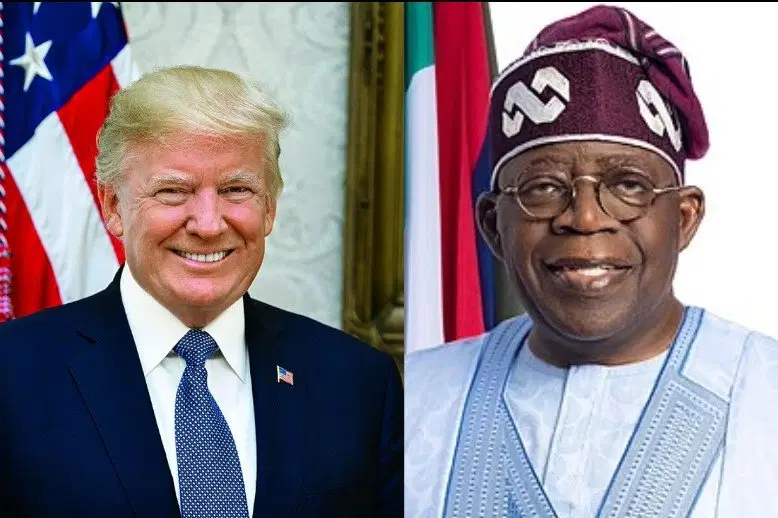
Lawmakers, religious leaders, United States Department officials, and witnesses were divided in their views as the United States House Foreign Affairs Subcommittee on Africa on Thursday held an open hearing on President Donald Trump’s redesignation of Nigeria as “Country of Particular Concern” over alleged Christian genocide.
Following the redesignation, the President threatened that the US military would enter Nigeria “guns-a-blazing to completely wipe out the Islamic terrorists who are committing these horrible atrocities.”
The Chris Smith-led committee had convened the hearing to review the scope of religious persecution in Nigeria, potential policy responses, including targeted sanctions, humanitarian assistance, and collaboration with Nigerian authorities to prevent further violence.
The first set of panellists at the hearing held at Room 2172 of the Rayburn House Office Building and streamed live online were Senior Bureau Official of the Bureau of African Affairs, Jonathan Pratt, and Deputy Assistant Secretary of the Bureau of Democracy, Human Rights, and Labour, Jacob McGee, who faced numerous questions posed by the lawmakers.
The second panel featured presentations by the Director of the Centre for Religious Freedom, Ms Nina Shea; Bishop Wilfred Anagbe of Makurdi Catholic Diocese in Nigeria; and Ms Oge Onubogu of the Centre for Strategic and International Studies.
Setting the tone for the hearing, Chairman Chris Smith highlighted that 89 per cent of all Christians martyred worldwide are in Nigeria, with over 52,000 Christians slaughtered since 2009.
He accused militant Fulani herdsmen of committing acts of rape, kidnapping, and murder with “total impunity” from Nigerian officials.
Smith argued the attacks were unequivocally “religiously motivated” as he blamed the previous administration for weakening U.S. pressure by removing Nigeria from the “Country of Particular Concern” list, despite recommendations from the U.S. Commission on International Religious Freedom.
Furthermore, he emphasised that the U.S. will not be silent while people are persecuted and will not stop fighting until perpetrators are brought to justice.
He also pointed to the compelling and disturbing testimony of witnesses, such as Bishop Wilfred Anagbe of the Catholic Diocese of Makurdi, to underscore the severity of the crisis.
Giving his presentation, Senior Bureau Official of the Bureau of African Affairs, Jonathan Pratt, said the US was worried that the violent activities of extremist groups such as Boko Haram, ISIS West Africa, ISIS Sahel, Al-Qaeda affiliate Ansaru, and Lakurawa were now spreading beyond the North-East to other regions, particularly Nigeria’s Middle Belt.
“Terrorists, separatists, bandits and criminal militias in Nigeria are all over the country with ongoing attacks often deliberately targeting Christian communities,” Pratt said, adding that the violence in the Middle Belt reflects a “problem of prioritisation” by the government.
According to the US official, although Nigerian security forces are engaged in counter-terrorism operations and taking significant losses in the North-East, more needs to be done to protect vulnerable communities and hold perpetrators accountable.
“The administration’s approach intends to raise the protection of Christians to the top of Nigeria’s priorities, especially in the Middle Belt,” Pratt said.
He noted that Nigeria, as Africa’s largest democracy and a key regional partner, shares economic and security interests with the United States. Pratt said Washington welcomes Nigeria’s willingness to cooperate following its designation as a “Country of Particular Concern” and looks forward to seeing these commitments translated into concrete actions on the ground.
Pratt also revealed that the Trump administration is developing a plan to incentivise and compel the Nigerian government to strengthen security for Christian communities and improve religious freedom. The plan will involve engagement from the US State Department, Treasury and potentially the Department of War to bolster counter-terrorism and protection measures.
“The levels of violence and atrocities committed against Christians and communities of all faiths in Nigeria are appalling and threaten the universal right to religious freedom,” Pratt said. “We remain open to working together with the Nigerians, but we also expect the Nigerian government to deliver results on the ground as proof of their commitment to this universal right.”
Smith and Pratt’s initial remarks set the tone for a variety of reactions.
During the session, Representative John James, Representative of the people of Michigan’s 10th Congressional district, and a member of the Energy and Commerce Committee, said the designation is necessary to address what he described as a worsening crisis for Christians in Nigeria.
“Nigeria is facing one of the gravest religious freedom crises in the world. I have visited and have seen firsthand the direness of the conditions in what is now the deadliest place on earth to be a Christian,” James said.
He detailed the extent of the violence. “Since 2019, nearly 17,000 Christians have been killed. In the first seven months of this year alone, hundreds more were murdered. These are not isolated tragedies, but a sustained pattern of religiously motivated violence, often ignored or even enabled by the Nigerian government.